
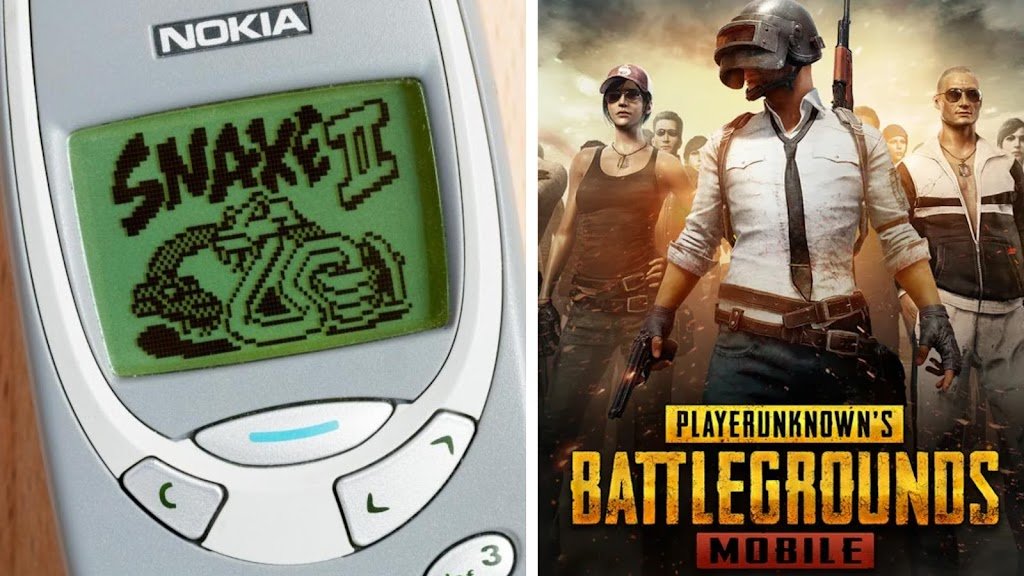
The Evolution of Mobile Gaming: From Snake to Battle Royale
|
|

Since the days of basic controls and monochromatic screens, mobile gaming has advanced significantly. An industry worth billions of dollars has grown from what began with simple games like “Snake” on the Nokia 3310 to intricate and visually spectacular games like “Fortnite” and “PUBG Mobile.” This evolution is a result of player preferences shifting, technology improvements, and the ongoing drive for innovation in the gaming industry. This piece will take you on a tour through the development of mobile gaming, from its inception to the popular Battle Royale games that currently rule the market.
I. The Early Days of Mobile Gaming
Back in the late ’90s and early 2000s, phones weren’t much more than tools for calling and texting — nobody was buying a mobile to play games on it. But developers saw an opportunity. They started building simple games that could actually run on the limited hardware those early phones had to offer.
The one everybody remembers is Snake. The idea couldn’t have been simpler: guide a snake around the screen, eat pixels, watch it grow longer, try not to crash into yourself or the wall. That’s it. No fancy graphics, no story, nothing complicated — just pure, addictive gameplay.
It looks almost laughably basic by today’s standards, but at the time, it was a big deal. Snake proved that people actually wanted to play games on their phones, and that realization ended up shaping the entire mobile gaming industry that followed.
II. The Rise of Java Games
As phones got more powerful, the games running on them got a lot better too — and Java-enabled phones were a huge part of that shift.
Suddenly, developers had more room to work with, and it showed. Classics like Tetris, Space Invaders, and Bejeweled made their way onto mobile screens, and people genuinely sank hours into them.
This was the point where mobile gaming started being taken seriously. It wasn’t just a gimmick or a way to kill five minutes anymore — these were real games, with real replay value, proving that phones could hold their own as an actual gaming platform and not just a side novelty.

III. The App Store Revolution Evolution of Mobile Gaming
If there’s one moment that really changed everything, it’s 2008, when Apple launched the App Store. All of a sudden, developers had a straightforward way to actually sell their games and reach millions of people — no complicated distribution deals, no middlemen making it hard to get noticed.
The iPhone itself helped a lot too. That combination of solid hardware and touchscreen controls opened up game design possibilities that just weren’t there before. Developers could suddenly build things that felt intuitive to play with your fingers instead of clunky physical buttons.
And then Angry Birds happened. It blew up almost overnight, going global in a way that took even the industry by surprise. More than anything else, it proved mobile gaming wasn’t some side hustle — it could genuinely compete as a major entertainment industry on its own.
Read More:- The Psychology of Addiction in Mobile Gaming

IV. The Era of Freemium
Once the App Store took off, the whole business model behind mobile games started shifting too. Instead of charging people upfront, developers realized they could give games away for free and still make serious money — just through in-app purchases and ads instead.
Games like Candy Crush Saga and Clash of Clans were the ones that really proved this model worked, and worked well. Both blew up massively, and their success set off a wave of freemium games trying to replicate that same formula. Free to download, easy to get hooked on, and just enough in-app purchases to tempt players who wanted to speed things up or unlock a little extra.
It wasn’t long before “free-to-play” became the default way most mobile games made money, and honestly, it still is today.

V. The Emergence of Battle Royale
Battle Royale had already taken over PC and console gaming in a big way before it eventually made the jump to mobile. And once it did, it hit just as hard. Games like PUBG Mobile and Fortnite Mobile brought that same intense, last-man-standing gameplay to phones and tablets — dropping dozens of players onto one map, scavenging for gear, and fighting until only one person (or squad) is left standing.
What really pushed things forward, though, was how these games looked and played. Console-quality graphics, genuinely smooth online multiplayer, real-time squad communication — none of that felt like a given on mobile before this. Suddenly, phones weren’t just capable of running games; they were capable of running games people took seriously.
This was the moment mobile gaming stopped being seen as the “lesser” platform and started being treated like a legitimate competitor to PC and console.

VI. Mobile eSports and Competitive Play
Once Battle Royale games took off on mobile, it didn’t take long for the competitive scene to follow. Titles like Free Fire and Call of Duty: Mobile started building real tournament circuits, complete with professional teams, structured leagues, and prize pools that actually made headlines.
These weren’t small, casual events either — we’re talking massive audiences, both in-person and streaming online, watching top players compete at a genuinely high level. That kind of attention gave mobile eSports a legitimacy it hadn’t really had before, putting it on the map alongside PC and console competitive scenes instead of being seen as an afterthought.
At this point, mobile gaming wasn’t just something people played to pass time — for a growing number of players, it became something they could actually build a career around.
VII. Augmented Reality (AR) and Location-Based Gaming
Mobile gaming took a genuinely different turn when developers started experimenting with AR and location-based features. Instead of just playing on a screen, players were suddenly interacting with their actual surroundings — and Pokémon GO is the game that really put this on the map.
Using your phone’s camera and GPS, the game let players wander around real neighborhoods, parks, and streets while catching virtual creatures that appeared to exist right there in front of them. It sounds simple, but the effect was huge — people were literally walking outside, exploring places they’d never been, all in the name of catching a Pikachu that wasn’t really there.
That blend of digital and physical worlds opened up a whole new way of thinking about mobile games. It wasn’t just about tapping a screen anymore — it was about getting up, moving around, and letting the real world become part of the gameplay itself.
VIII. Cloud Gaming and the Future
Looking ahead, cloud gaming is shaping up to be the next big shift for mobile. Services like Xbox Cloud Gaming and NVIDIA GeForce NOW are already showing what’s possible — streaming high-quality games directly to your phone, no powerful hardware required. All the heavy lifting happens on remote servers; your phone just needs a decent internet connection to keep up.
That changes things quite a bit. Suddenly, someone with a budget phone can play the same graphically demanding games as someone with a flagship device, just streamed instead of running locally. It levels the playing field in a way that wasn’t really possible before.
If this keeps developing the way it’s headed, the whole idea of “needing a powerful phone” to play serious games could become pretty much irrelevant. Mobile gaming’s next big audience might not come from better hardware at all — just better internet.

IX. Mobile Gaming’s Impact on Society
Beyond just being a booming industry, mobile gaming has actually changed how people live day to day. It’s reshaped the way we entertain ourselves, how we connect with friends and strangers alike, and even how some people learn — think language apps and brain-training games that lean on the same mechanics that make games addictive in the first place.
Part of what makes this so significant is just how accessible it all is. You don’t need a console, a PC, or any special setup — just a phone, which most people already carry around anyway. That accessibility is exactly why mobile gaming ended up woven into millions of people’s daily routines, whether it’s a quick match on a commute or a longer session to unwind after work.
At this point, it’s not really a niche hobby anymore. For a huge chunk of the world, it’s just… part of life.
X. The Future of Mobile Gaming
If the past two decades are anything to go by, mobile gaming isn’t slowing down anytime soon. Phones keep getting more powerful, and that means developers keep pushing what’s visually possible — sharper graphics, more detailed worlds, games that genuinely look console-quality in your hand.
AR and VR could take things even further. We’re already seeing early signs of what deeper immersion might look like, and if that keeps developing, it could change how people experience mobile games altogether — less “looking at a screen” and more “actually being in it.”
Then there’s 5G, which is quietly a bigger deal than people give it credit for. Faster, more stable connections mean smoother online multiplayer, less lag, and fewer dropped matches — all things that matter a lot for competitive and social gaming alike.
Put it all together, and mobile gaming looks less like a passing trend and more like it’s just getting started.
Conclusion
The transition from “Snake” to Battle Royale games on mobile devices is evidence of the industry’s tenacity, flexibility, and inventiveness. What began as a novelty on early mobile phones has developed into a massive global industry, with games that are just as complex and engaging as those on consoles and PCs.
We can only speculate about what mobile gaming will look like in the future as technology advances, but one thing is certain: it will always enthrall and amuse audiences everywhere. Therefore, there is a place for you in the ever-expanding world of mobile gaming, regardless of your level of skill or interest in competitive eSports. There are definitely a ton of other fascinating developments in the continuing evolution of mobile gaming; the transition from “Snake” to Battle Royale is just one chapter.